Where generative search meets organic optimisation.
Everything we publish on AI Overviews, SGE, AI-augmented search engines and the evolution of classic SEO in the era of Large Language Models. For teams managing both the search engine and the generative model.
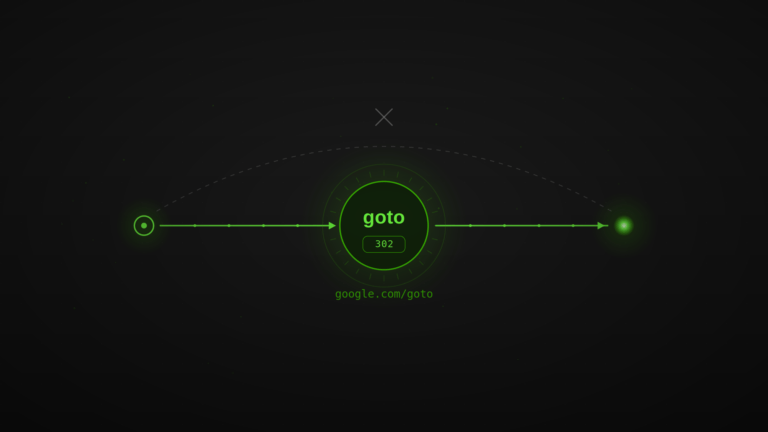
Google.com/goto : the redirects changing the rules of the game for SEO What they are, why Google introduced them, and what they mean for anyone working in organic search 1. The appearance of goto links between June and August 2026…
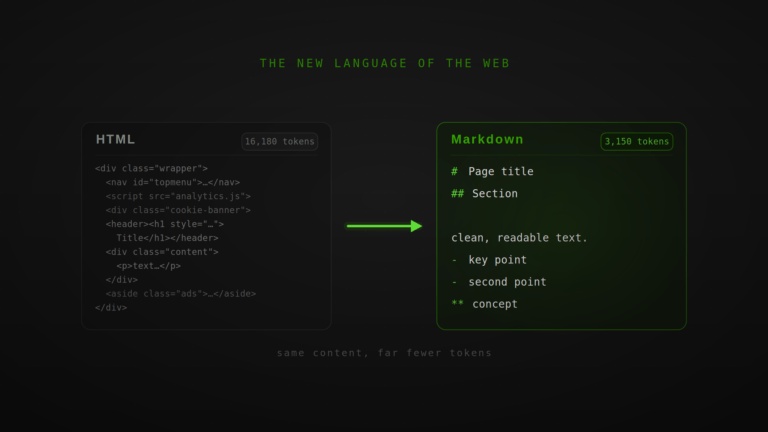
Markdown for AI agents: the web’s new language The web has always been built for human beings. HTML pages loaded with menus, scripts, advertising banners, tracking tags: everything designed for a browser that knows how to render each element visually.…
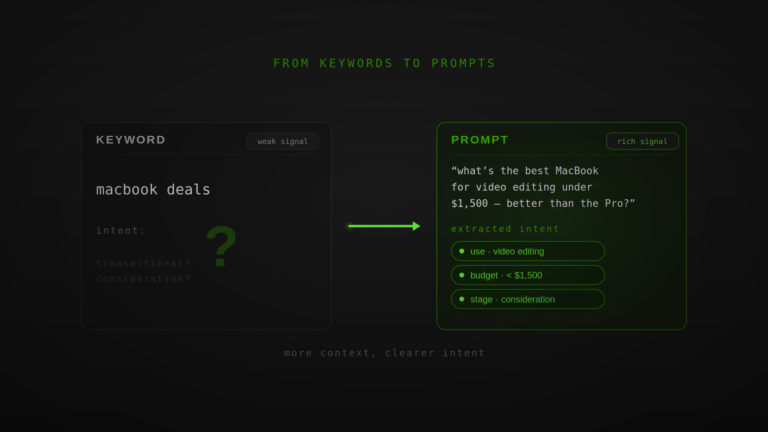
Prompt analysis: a new world to explore Search analysis was born as a tactical tool for ranking on search engines. With the advent of chatbots and large language models, the raw material changes structurally - and with it some of…
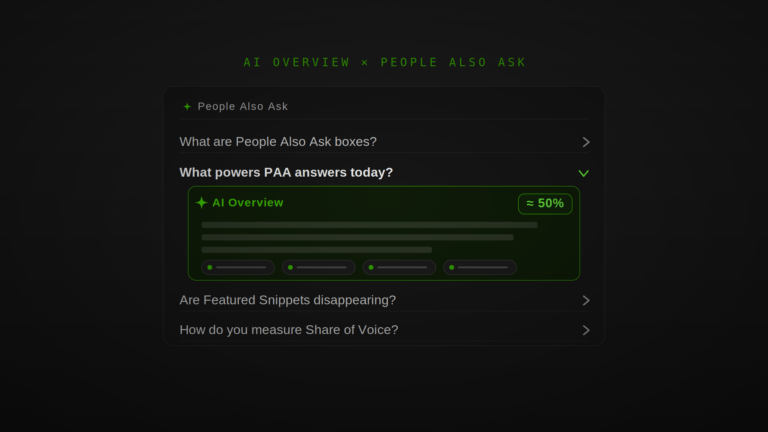
The impact of AI Overview on People Also Ask answers People Also Ask boxes first appeared in Google's results in the United States in 2015. After an initial phase of testing and development, they were rolled out more or less…
Google, Bing and GEO : who is right? For a while, as the debate among digital marketing professionals raged over the scope of GEO (Generative Engine Optimization) and AEO (Answer Engine Optimization) - and over how far these disciplines differed…
Technical GEO: Discoverability, Accessibility and Readability Rewriting the Rules of the Game in the AI Era The revolution sparked by Large Language Models (LLMs) is radically reshaping the dynamics of online search, ending Google's long-standing monopoly and having a powerful…
Google Search Console and Bing Webmaster Tools: Governing Access to Your Data Saying we need to pay attention to who can access our organic performance data and all the other information offered by Google Search Console and Bing Webmaster Tools…
From Keywords to Prompts and Back: Bing's AI Performance Panel In the article dedicated to query fan-out and reciprocal rank fusion we looked at the mechanism by which answer engines break down a user's complex prompts into sub-queries and then…
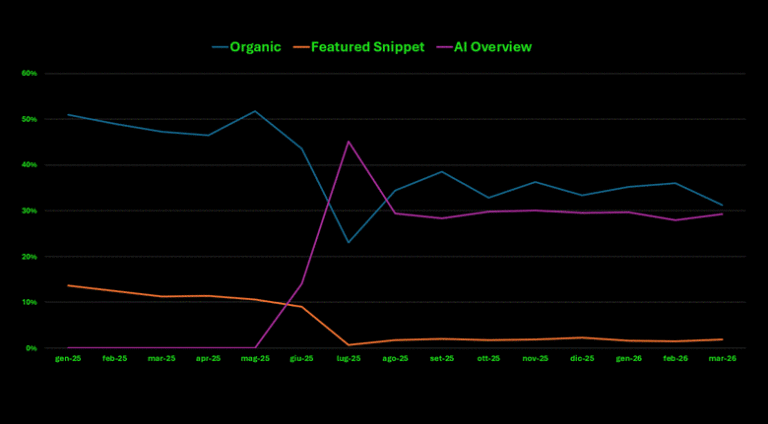
Nello scorso articolo abbiamo iniziato ad analizzare l’impatto dell’AI Overview sui classici Blue Link e sui Featured Snippet, listing di diversa natura ma accomunati da una buona capacità di trasformare le impression in click nel contesto della ricerca organica su Google.
In linea generale, l’impatto dell’AI Overview è stato imponente e ha segnato una vera pietra miliare nel processo di trasformazione di Google in motore di risposta, ma non tutti i settori tematici sono stati interessati da questo vero terremoto nella stessa misura.
In Italia, ad esempio, dall’analisi di un panel di oltre 6 milioni di SERP da gennaio 2025 a marzo 2026 si evidenzia un impatto complessivo dell’AI Overview sui top ranking organici di poco superiore al 22%. Se si isolano i diversi territori, però, emergono scenari completamente diversi.